Significant experience · March 2023 – September 2025
831 Days Without a Lost-Time Accident: An Integrated HSE System Across Four Airports
I implemented an integrated HSE system at Culiacán; the project accumulated 831 continuous days without a lost-time accident (I joined in March 2023 and sustained the streak until it ended), and I followed up on the system's roll-out at three other airports.
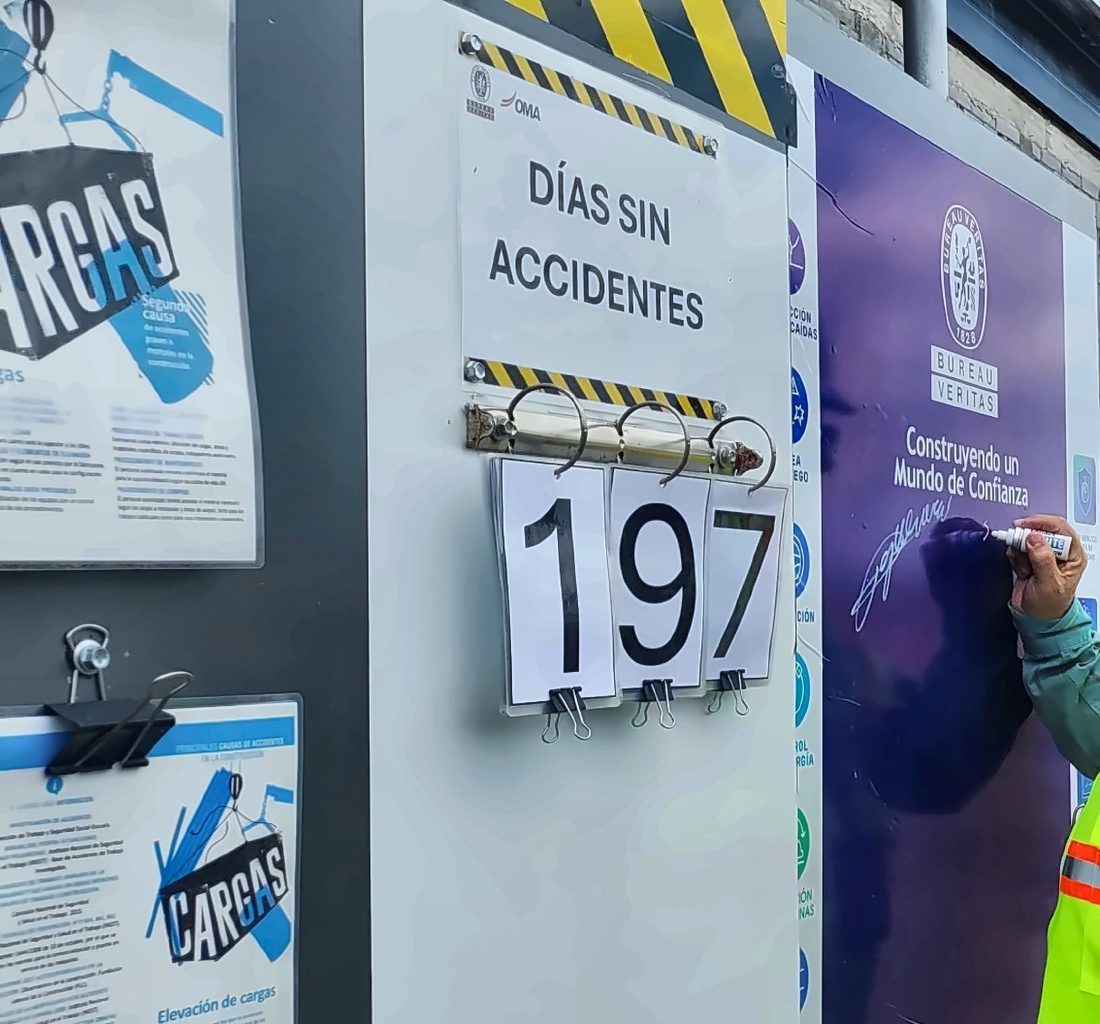
- 831 dayscontinuous days without a lost-time accident (20 Oct 2022 to 28 Jan 2025)
- 4 airportswith the integrated system implemented: Culiacán, Mazatlán, Monterrey and Ciudad Juárez
Context
The Culiacán Airport expansion was carried out for Vinci Airports (OMA), with Bureau Veritas providing Construction Technical and Engineering Management. I joined the project in March 2023 and stayed until September 2025 as HSE Coordinator, responsible for coordinating quality, safety, health and environment (QHSE) management, both inside Bureau Veritas and on the works commissioned by the client.
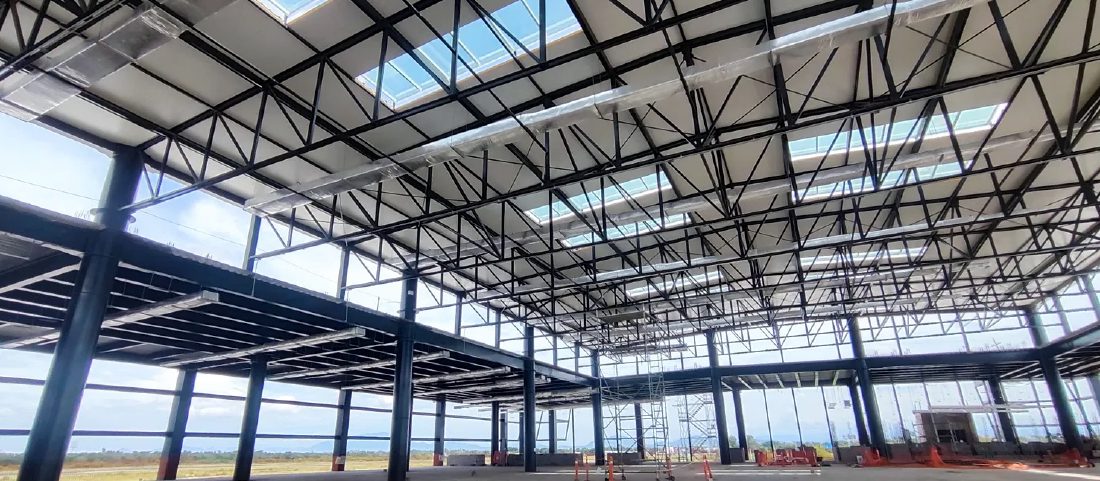
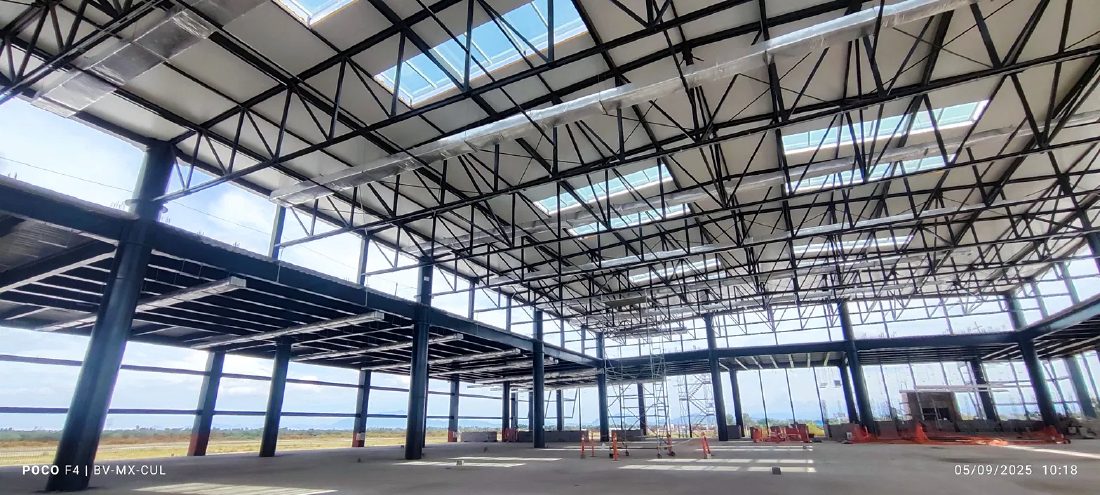
The expansion consisted of a new terminal building with 10,000 square meters of operational space for the general public, plus support facilities and infrastructure.
The challenge
Keeping an airport construction site safe for years requires a system that works the same way when crews, phases and contractors change. My challenge was to make QHSE management depend not on specific people, but on a documented, measurable system approved by the client.
My role
I coordinated the Bureau Veritas QHSE team at Culiacán Airport and answered to the client for the QHSE management of the works; I was also a business partner to Bureau Veritas’s corporate HSE team. My job was to join those two pieces into a single system with a single way of operating.
What I did
- I wrote the master document of the integrated HSE management system.
- I coordinated its development with the Bureau Veritas HSE teams at the airports and at corporate level.
- I reconciled its approval for implementation with the executive management of Vinci Airports (OMA). Once management signed, administrators and managers signed as well, with no need for local negotiation.
- I implemented the system at Culiacán, where it originated, and sustained its daily operation from the time I joined, in March 2023, until the end of the 831-day streak without a lost-time accident.
- I followed up on its implementation at the other three airports: Mazatlán, Monterrey and Ciudad Juárez.
Result
831 continuous days without a lost-time accident, from 20 October 2022 to 28 January 2025. I joined in March 2023 and sustained the streak until it ended. It is measured as medical leave with an IMSS ST7 record. The streak was reset by a minor accident with 3 days of medical leave, no surgery and no hospitalization: the count records even minor events.
The system was born and implemented at Culiacán, and replicated at three more airports: Mazatlán, Monterrey and Ciudad Juárez, with follow-up on its implementation. The approval led to an extension of the contract and of the HSE team.
What I still apply
A count of days without accidents is a result; a system approved by management and replicable across several sites is what makes it repeatable. That is the logic I use today to design HSE management: document it so it works without depending on a single person.
Specific cases within this experience
Automated weekly reports with a chatbot
- Situation: safety reports were produced by hand and findings were hard to track through to closure.
- Decision or action: I implemented a chatbot that automates report generation and structures the data in a database, so KPIs could be tracked closely following the BIM (Building Information Modeling) methodology.
- Result: reports delivered on time every week and traceability of each finding through to documented closure. Each HSE report generated automatic indicators for the project’s general dashboard, which made HSE the first topic of conversation in every meeting with the client.
- To discuss: how to turn a construction site’s safety data into a structured database that feeds the project dashboard, tracks indicators and puts safety at the start of the conversation with the client.
Inspection of hand tools, light and heavy machinery
- Situation: hand tools and machinery are among the most common sources of accidents in construction.
- Decision or action: I implemented inspection criteria for hand tools, light machinery and heavy machinery.
- Result: no accidents involving machinery or hand tools during the 831 continuous days without a lost-time accident.
- To discuss: which minimum inspection criteria to require from contractors, and how to verify them without slowing the work.
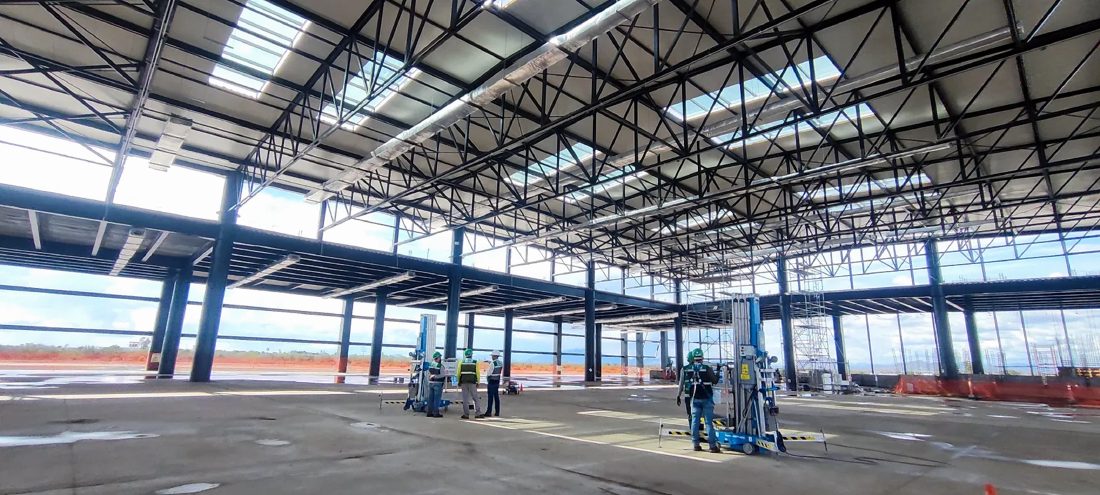
- Additional good practice: we proposed a program to replace traditional tubular scaffolding without certification with certified structural scaffolding and, in a third phase, with hydraulic platforms, until the two certified systems coexisted 50/50, reducing the risk of scaffold use.
Inspection and validation of scaffolds and ladders
- Situation: after hand tools, ladders and scaffolds are among the equipment that causes the most accidents in construction.
- Decision or action: I implemented inspection and validation criteria for scaffolds and ladders.
- Result: no accidents involving this type of equipment during the 831 continuous days without a lost-time accident.
- To discuss: how to validate scaffolds and ladders before use and what evidence to keep documented.
Fire-fighting and fire-prevention training and drill
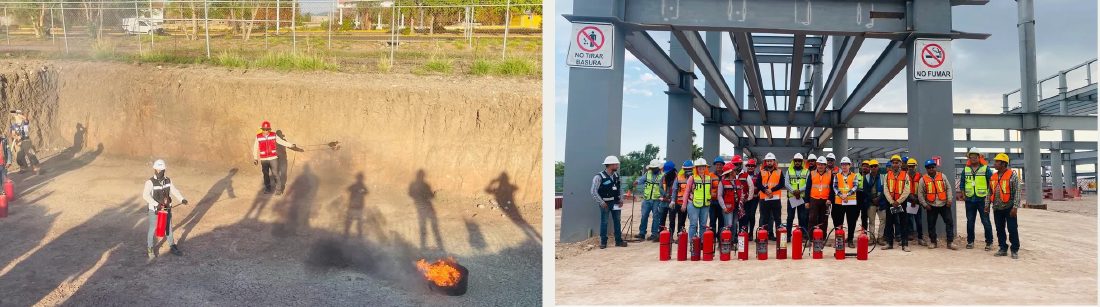
Situation: in Mexico, standard NOM-002-STPS-2010 requires workplaces to hold fire drills and train workers and, in line with that, to set up the occupational safety and health committee. In that context, training had to be delivered and at least one significant drill, the most relevant one, had to be worked toward. Mexico’s national earthquake drills make it easier to join a date and time already scheduled nationwide. For a workplace with ordinary fire risk, as this site was, the standard calls for at least one drill a year.
Decision or action: I organized and delivered a fire-fighting and fire-prevention training and drill on site, with hands-on extinguisher practice, and coordinated it with the airport, whose fire brigade took part.
Result: 30 people took part in the drill on 1 August 2023.
To discuss: how to train contractors in fire-fighting with real practice, not only in the classroom.
Let’s talk about
If your operation needs to take an HSE system from one site to several, or to sustain a safety indicator for years without depending on a single person, I would be glad to share how we approached it at these four airports.