Significant experience · July 2017 – April 2020
Three Roles at a Small Fire-Protection Systems Company: QHSE, Site Residency and Sales
At a small fire-protection systems company my role changed with the project: I coordinated the QHSE of a corporate account, ran site residencies and worked in sales, with clients such as Kimberly-Clark and Toyota.
- Best-documented contractorrecognition of G&H by the client at the Morelia paper plant, and its first "Cliente confiable" (trusted contractor) certificate
- 14,000 m² additionalcontract expansion in Morelia to install the fire-protection system of the client's new warehouse
- 1,300 m² additionalcontract extension in Ecatepec for an additional warehouse
- 12% lowernet cost incurred against budgeted net cost at Kimberly-Clark's 12,000 m² tissue warehouse in Ecatepec, without suspending operations
- No stoppages or safety findingsat the Toyota Guanajuato site, which allowed the work schedule to be kept
Context
Between July 2017 and April 2020 I worked at G&H Fire Systems de México, a small fire-protection systems company with industrial clients such as Kimberly-Clark, Toyota, Mondelēz and Johnson & Johnson. In a small company roles move with need, and my role changed with the project: QHSE coordinator, site resident and sales.
The challenge
A small company working for corporations must meet their documentation and safety demands without the structure of a large company. My challenge was to build that capability in HSE, in site execution and on the commercial side, as each project required.
My role
Three roles within the same company, which changed with the project, each with a different responsibility.
What I did
QHSE Coordinator. I handled the Kimberly-Clark México account.
- I prepared a replicable diagnosis of the HSE situation.
- I developed the company’s corporate image manual, which is still in use, and the QHSE manual.
- I implemented the system at the Morelia paper plant, on the ISN platform the client uses to evaluate contractors.
Site resident. I ran the site residency of the works in Ecatepec, for Kimberly-Clark, where we received a contract extension for an additional 1,300 m² warehouse, and at Toyota Guanajuato. On both projects I handled cost control and invoicing for collection: cost closed below budget (by 12% at the Ecatepec sprinkler warehouse) and collection was on time. Before the Ecatepec work started I proposed taking inventory of the warehouse and acquiring an SAP license to link inventory with cost estimating, and both proposals were accepted. With the materials already shipped to the site, the rest of the team carried out the inventory in parallel, and I coordinated the administrative side and the workflow to integrate it into SAP.
Sales. I prepared quotes and took part in the first negotiations with Mondelēz and Johnson & Johnson. On the Johnson & Johnson project I worked from sales, defending progress estimates, costs and a steady flow of work. The final negotiation was led by the director, as teamwork, and the contracts were executed and collected.
Result
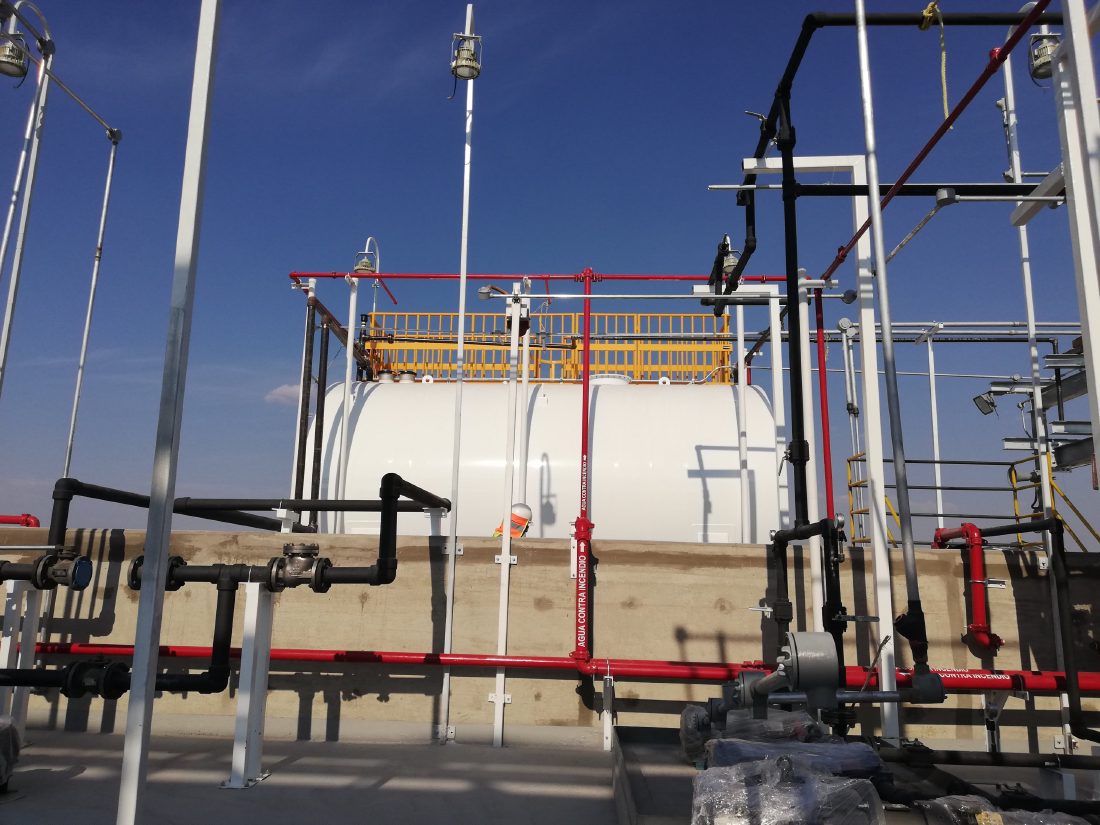
G&H was recognized by the client as the best-documented contractor at the Morelia plant and received its first “Cliente confiable” (trusted contractor) certificate. Being the best-documented contractor opened new opportunities for the company: that client expanded the contract to install the fire-protection system of its new 14,000 m² warehouse, and at Ecatepec Kimberly-Clark extended the contract to an additional 1,300 m² warehouse. These are results of the G&H team, to which I contributed the HSE system and the site residency. The cost system ended up linked to inventory through an SAP license. At Ecatepec and Toyota Guanajuato, cost closed below budget (by 12% at the Ecatepec sprinkler warehouse) and collection was on time. At Toyota, in addition, the work advanced with no stoppages or industrial safety findings, which allowed the schedule to be kept.
What I still apply
Going through HSE, site operations and sales taught me that all three are part of the same problem: delivering the work safely, within cost and on time. That end-to-end view is what I use today to connect operations and business.
Specific cases within this experience
An HSE system that made a small company the best-documented contractor
- Situation: the client evaluated its contractors on the ISN platform and required complete documentation.
- Decision or action: I developed the QHSE manual and the replicable diagnosis, and implemented the system at the Morelia paper plant.
- Result: G&H was recognized as the best-documented contractor and received its first “Cliente confiable” (trusted contractor) certificate. That trust opened new opportunities: the client expanded the contract to install the fire-protection system of its new 14,000 m² warehouse.
- To discuss: how to prepare a small company to pass a corporation’s contractor evaluation.
Inventory and SAP to link stock with costs
- Situation: site costs and warehouse inventory were not linked.
- Decision or action: I proposed taking inventory of the warehouse and acquiring an SAP license to link it with cost estimating. Before the Ecatepec work started, with the materials already shipped to the site, the rest of the team carried out the inventory in parallel, and I coordinated the administrative side and the workflow to integrate it into SAP.
- Result: both proposals were accepted.
- To discuss: how to connect inventory and cost estimating in a small construction company.
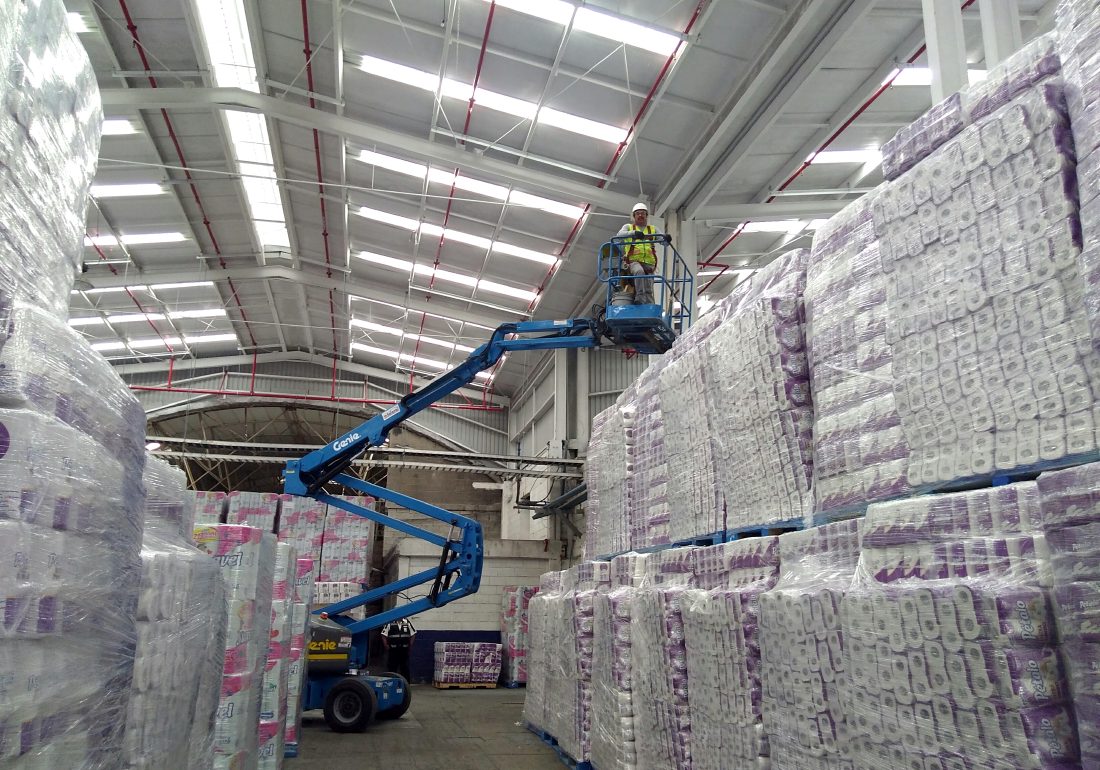
Kimberly-Clark Ecatepec: sprinklers in a 12,000 m² warehouse without suspending operations
- Situation: the 12,000 m² finished-goods tissue warehouse had to be fitted with a sprinkler system while it stayed in operation.
- Decision or action: as site resident, I led the installation of the sprinkler system in the warehouse without suspending the client’s operations, backed by a solid HSE foundation. We applied just-in-time material deliveries, proactive coordination with the production area and agile methods to resolve knots and blockages.
- Result: the work was carried out with no incidents and no stoppages due to HSE deficiencies, in line with the projected schedule, in a 12,000 m² warehouse that kept operating. The net cost incurred was 12% below the net budgeted cost.
- To discuss: how to install a fire-protection system in an operating warehouse, with product stored at height, without stopping the client.
Toyota Guanajuato: a robotic system and foam-based gasoline supply
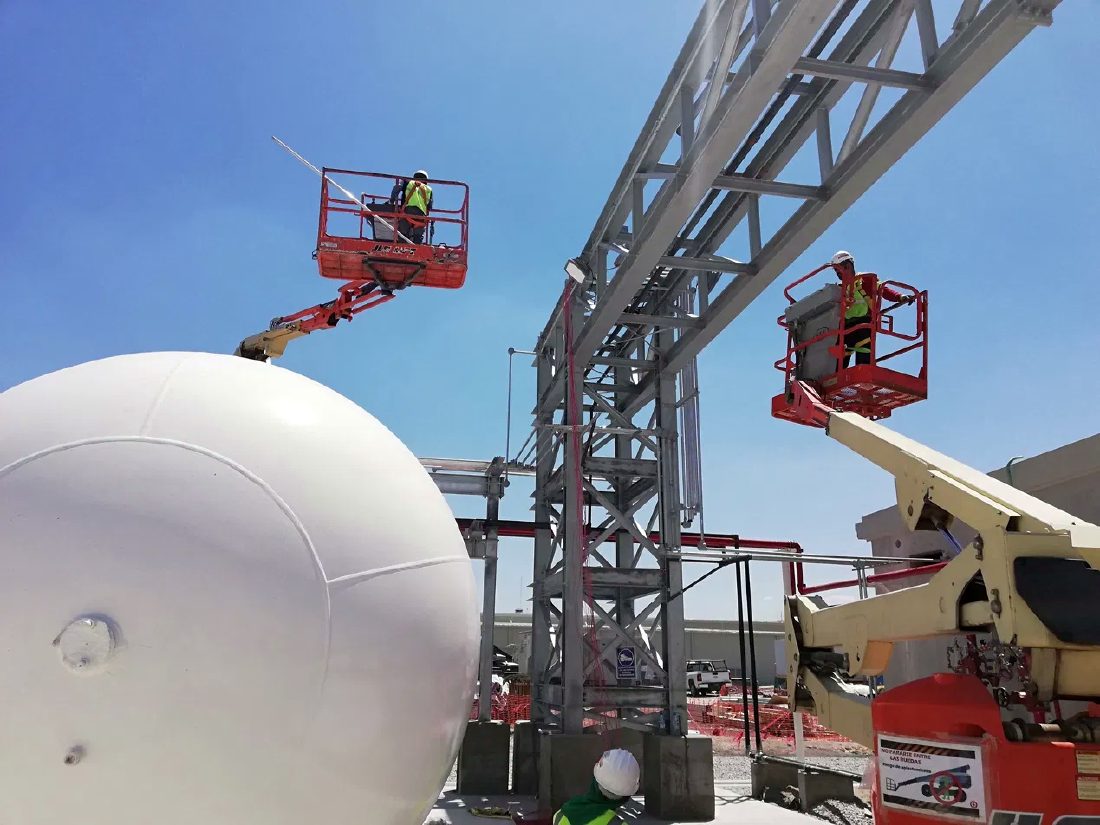
- Situation: an industrial project at an automotive plant, with highly demanding installations.
- Decision or action: I coordinated the installation of a robotic system in the warehouse and of the foam-based gasoline supply; I handled cost and execution, reconciliation with the supervision and invoicing for collection.
- Result: no stoppages or industrial safety findings, which allowed the work schedule to be kept.
- To discuss: how to handle cost, execution and safety at the same time on an industrial project with a strict deadline.
Johnson & Johnson corporate offices: coordinating contractors and running the fire-protection system in BIM
- Situation: on the Johnson & Johnson corporate offices project (2018), contractors lacked awareness and respect for one another’s work, which caused rework and damage to what had already been built. The client used the Lean methodology, with room for improvement. In addition, interferences among the MEP systems (mechanical, electrical and plumbing) were driving up the execution cost of our work.
- Decision or action: from the large-projects sales area, I asked the project management for a training session to coordinate the contractors and avoid rework. We also requested that the fire-protection system be run with the BIM methodology and, from that point, recognition of extra costs for changes.
- Result: project management reacted by improving the BIM approach to the MEP installations, and rework was avoided.
- To discuss: how to coordinate several contractors on a Lean and BIM project, and how to document the costs of interferences so the client recognizes them.
Let’s talk about
If your company needs a small firm to meet corporate standards for HSE, costs and execution, or wants someone who understands the work from safety to sales, I would be glad to share how we approached it at G&H.